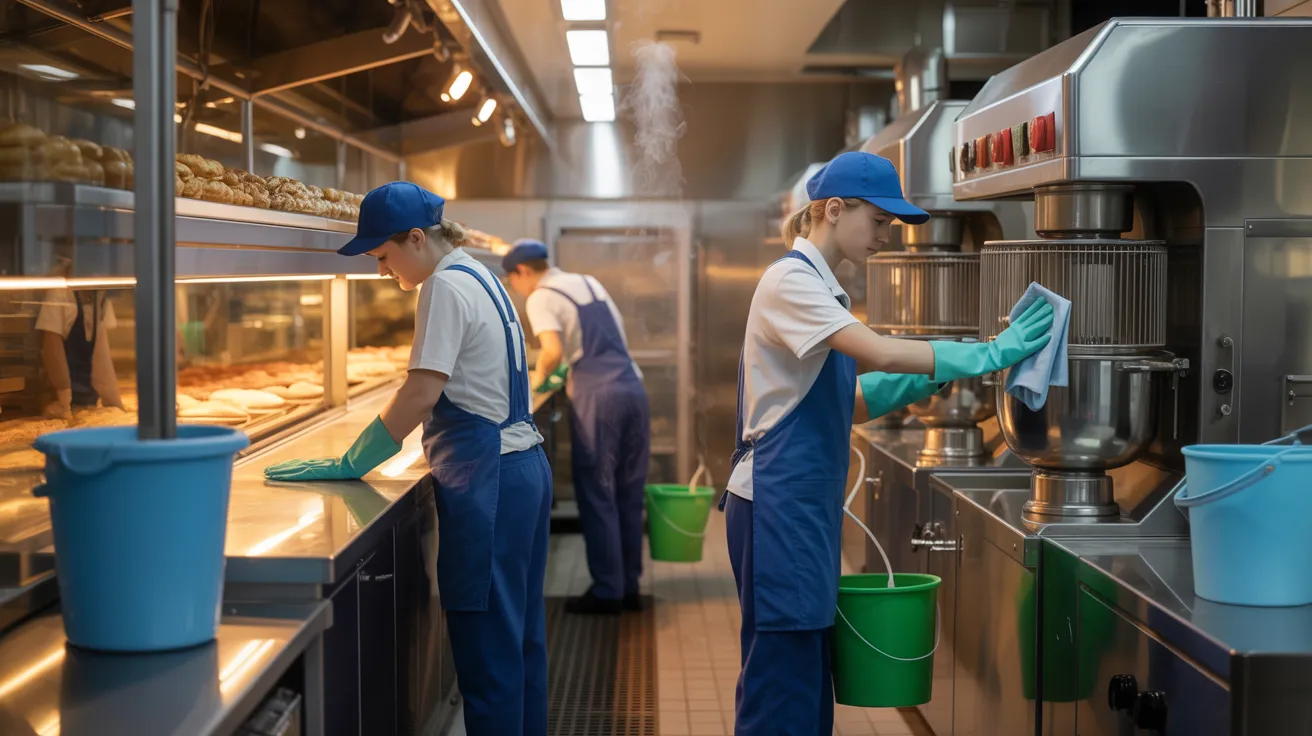
Commercial hygiene experts located in Brampton ensure restaurants, commissaries, bakeries, warehouses, and food service vehicles to sanitation standards. They treat high-touch surfaces, food prep surfaces, equipment, floors, drains, restrooms, and food handling areas with certified chemicals, in correct dilution, and using documented contact periods.
Main Points
- Sanitation specialists from Brampton assist restaurants, grocery departments, commissaries, warehouses, bakeries, schools, mobile vendors, and allergen-sensitive operations.
- Zone-based workflows clean frequently contacted areas, food-contact equipment, kitchens, floors, drains, restrooms, and storage areas for reducing cross-contamination.
- Approved sanitizer dilution, suitability, and contact time are confirmed by certified vendors, with completion filed via tests, reviews, and corrective-action records.
- Proper sanitation plans take into account hazard, production rate, format changes, accidents, and requirements when designating routine, recurring, and cyclical activities by area.
- Contractors should demonstrate hazard analysis knowledge, public-health competency, WHMIS training, coverage, credentials, colour-coded instruments, and compliance-ready sanitation documentation.
Food Safety Cleaning Requirements for Brampton Operations
Food safety cleaning is required for any Brampton facility that processes, stores, prepares, packages, or serves food. Apply it to your establishment if it meets the criteria for health oversight, food standards, or HACCP systems. This includes dining establishments, break rooms, distribution centers, market departments, meat shops, fish areas, stores, and food prep kitchens.
Adherent sanitation standards remains essential in supply warehouses, processing plants, freezer locations, commercial bakeries, school food programs, reception facilities, and food delivery centers. Portable temporary ventures apply similarly, including catering trucks, festival vendors, and pop-up food booths. Your facility needs documented cleaning protocols should your employees process ingredients, portion ready-to-eat items, reheat products, or store allergens. In Brampton, cleanliness stays voluntary; it comprises statutory, functional, and public health adherence.
What Services Do Brampton Cleaning Experts Provide?
Professional cleaning teams specializing in Brampton disinfect high-contact surfaces, food preparation areas, floors, and restrooms to satisfy food safety standards and health requirements. Focus on these locations stems from extreme cross-contamination risk, injury hazards, and compliance issues.
If you comprehend their cleaning services, you'll be able to confirm your facility meets required operational and regulatory standards.
Essential High-Touch Surface Cleaning
assign how periodically each point is cleaned
testing surfaces to confirm disinfection success
Kitchen Areas, Floor Surfaces, and Bathroom Spaces
Professional cleaners in Brampton prioritize kitchens, floors, and restrooms given that each location involves distinct food safety, falling hazards, and public health requirements. In industrial kitchens, you need degreasing on cook lines, equipment exteriors, drains, prep surfaces, and splash zones to minimize bacterial growth and pest activity.
Professional floor care with documentation is also included. is also provided as part of the service.
In restrooms, cleaners disinfect touchpoints, fixtures, partitions, dispensers, and waste containers then restock supplies and control odours. They also service restaurant moprooms, where chemical storage, sink hygiene, and drainage conditions can affect sanitation compliance and staff safety daily.
The Importance of Food Safety Cleaning in Brampton
Brampton businesses need to implement proper sanitation practices for satisfying health code requirements and obtaining approval. You also minimize bacterial spread through proper cleaning of food-preparation surfaces, appliances, and frequently-touched items. Most importantly, you safeguard public health by lowering the risk of foodborne illness in your facility.
Sanitary Standards Adherence
Brampton food companies must comply with stringent health requirements, so cleaning procedures is essential to satisfying health codes, ensuring the safety of customers, and eliminating penalties. You must maintain sanitary food-contact surfaces, verifiable cleaning logs, correct sanitizer application, and verifiable staff procedures that align with municipal and provincial inspection expectations.
During inspections of your operation, auditors determine if your cleaning program ensures protected inventory management, tool sterilization, refuse management, and facility cleanliness.
Contamination Control
Maintaining health code standards copyrights on your capacity to prevent cross-contamination during daily food handling and cleaning. You must separate raw ingredients from ready-to-eat foods, sanitize prep surfaces between tasks, and position cleaning agents away from food surfaces. Explicit protocols lower contamination threats and support consistent compliance during inspections.
Building allergen isolation prevents priority allergens from contacting common workstations, storage, or apparatus. Utilize dedicated cutting boards, color-coded tools, and strict utensil labeling so team members won't blend products during preparation or service.Mandate hand cleaning following uncooked meats, shellfish, egg items, or allergen substances. Refresh cleaning cloths frequently, and confirm disinfectant efficacy using test strips. When your team follows these practices every shift, you foster a cleaner, more secure operation that exceeds Brampton's safety standards daily.
Public Wellness Defense
Should food safety cleaning break, you don't simply encounter inspection problems—you increase the potential of foodborne illness impacting customers, staff, and the wider Brampton population. You also weaken your role in protecting public health, especially in busy food facilities where pathogens travel quickly through surfaces, equipment, and touchpoints.
You need cleaning protocols that remove contaminants, disinfect appropriately, and validate outcomes. This involves maintaining contact periods, selecting approved disinfectants, logging schedules, and educating staff to meet regulatory requirements. These controls promote illness spread by minimizing pathogens before contaminating food or hands. Throughout Brampton, effective sanitation safeguards susceptible populations, reduces outbreak risk, and demonstrates your diligence. When you follow proper protocols, you exceed regulations—you lower hazards and facilitate secure food handling throughout the area.
How Can Cleaning Practices Ensure Food Safety Compliance?
Maintaining strict sanitation practices promotes food safety compliance by minimizing contamination hazards, limiting pathogen development, and keeping your facility in accordance with sanitation requirements under HACCP-based programs and public health regulations. You validate that product-contact areas appear visibly clean and microbiologically controlled, supporting documented preventive controls and inspection readiness.
Cleaning programs additionally fortify allergen prevention by clearing residues that can trigger undeclared allergen exposure.
How Do You Plan Commercial Cleaning Services?
food-contact surfaces, bathrooms, and high-contact areas
facility closures, weather-related soil buildup, or times of elevated pest pressure. If your facility hosts promotions, catering, or public functions, plan cleaning immediately prior to and following for optimal event turnaround
Selecting the Right Brampton Cleaning Experts: Key Considerations
Screen providers initially by their food-safe sanitation requirements—not budget alone. You need to verify that every company meets CFIA, public health, and HACCP standards for your operation. Demand proof of insurance, WHMIS compliance, training records, and management systems. Evaluate technician knowledge of contamination dangers, chemical safety, and documented sanitation practices.
You should also assess business dependability and responsibility. Request references from food facilities in Brampton, then examine response times, corrective actions, and communication standards. Confirm the company participates in supplier audits and can present audit-ready records when regulators or third parties request evidence. Check whether equipment maintenance is performed, colour-coded tools are used appropriately, and site-specific hazards are recognized. A qualified provider protects regulatory adherence, product quality, and your brand reputation.
What does a Food Safety Cleaning Plan consist of?
Establish a documented program that clarifies every sanitation duty, standard, and accountability ahead of production commencement. You should specify cleaning frequencies, approved chemicals, dilution rates, contact times, tools, and verification methods for each zone, surface, and piece of equipment. Make sure to include pre-operational inspections, corrective actions, and employee training requirements.
Your strategy should also focus on cross-contamination controls, waste handling, pest-prevention measures, and documented schedules for rest areas, drains, flooring, and food-contact surfaces. Detail how you'll separate raw and ready-to-eat processes, support ingredient tracking, and ensure accurate allergen labeling through validated cleaning between product changes. You should assign accountability, keep signed records, and assess results against regulatory standards, HACCP controls, and customer requirements. When gaps appear, update procedures immediately and instruct staff.
Commonly Requested Inquiries
Do sanitation providers work during nighttime hours at Brampton facilities?
Yes, you can arrange sanitation coverage to support nighttime operations in Brampton facilities. You'll coordinate overnight sanitation around production windows, security measures, and staffing requirements. Services generally outline nightshift logistics to reduce disruption, ensure adherence, and record finished work. You should confirm response times, oversight, lockout procedures, and disposal methods before service begins.
Will sanitation professionals respond to emergency spills?
Yes, you can locate several Brampton sanitation experts offering emergency response options. They handle contamination, assess dangers, contain affected areas, and perform swift decontamination to minimize risk and prevent disruption. You should verify response times, certifications, safety measures, and disposal methods. If your facility needs compliance, choose a service that documents incidents, maintains standards, and supports audits.
Will green disinfectants clean safely food-handling equipment?
Absolutely, plant-based sanitizers are secure for food-handling equipment when you pick items marked food-safe and meeting regulatory standards. You must check exposure duration, concentration levels, and rinse requirements before use. Plant-derived products lower toxic chemical contact, though you require evidence of effectiveness against target microorganisms. For maintaining residue free surfaces, adhere to manufacturer instructions exactly and validate the sanitizer adheres to applicable food industry sanitation standards.
Can cleaning schedules adapt with seasonal shifts?
Yes, you can modify cleaning plans for production fluctuations. You should adapt timing, staff levels, refer to this page disinfectants, and verification steps to correspond to seasonal workflows while sustaining regulatory adherence. You'll lower production interruptions by timing cleaning around production shifts, high demand periods, and operational patterns. You should additionally update standard operating procedures, training, and environmental monitoring to address seasonal hazards, emerging allergens, or higher contamination levels. Regular reviews maintain your plan current.
Do commercial cleaning providers coach your team in proper hygiene techniques?
Absolutely, commercial cleaners frequently provide employee education on sanitation best practices. Your staff receives training on correct chemical handling, contact times, contamination avoidance, equipment disassembly, and paperwork. They typically align guidance with HACCP, GMP, and CFIA or regional health authority standards. Many conduct sanitation audits to verify compliance, pinpoint weaknesses, and strengthen corrective measures. This enables you to sustain consistent procedures, clear audits, and reduce food safety risks routinely.
Final Thoughts
Through engaging Brampton commercial cleaning and food safety experts, you do far more than tidy—you ensure your facility for inspections and your standards stay aligned with regulations. From kitchen spaces to processing areas, all maintained surfaces and organized zones reduce contamination risks and avoid major losses. Through scheduling maintenance on suitable timelines and adhering to a comprehensive cleaning program, you ensure protection for employees, clients, and your standing. In a tightly controlled regulatory landscape, proper sanitation cannot be considered optional—they are fundamental to success.